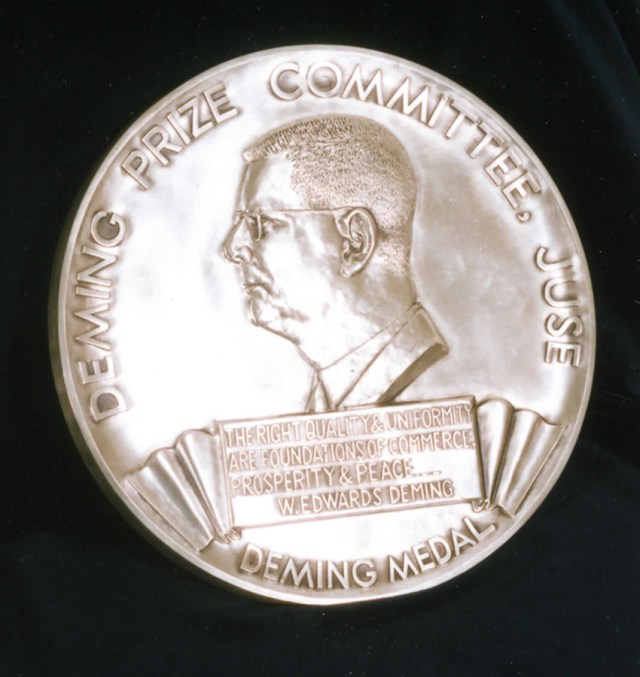
W. Edwards Deming wrote that improving quality results in a chain reaction “lower costs, better competitive position, happier people…and more jobs”.
Deming worked in Japan after World War Two where he helped rebuild the Japanese economy. He received honours from the Emperor of Japan and the President of the USA. His work underpins agile, lean and our understanding of quality.
In “Out of the Crisis” Deming points out that improving quality increases productivity. He quotes research from Rikkyo University in Tokyo that says “when we improve quality we also improve productivity”. He also speaks to company employees who tell him that as quality improves productivity increases because there is less rework and less waste. Rework is work that you have to do again, an example would be fixing bugs. Bug fixing reduces productivity as we have to fix the bug rather than create new features. Another example of waste in software development would be an incident in production which forces engineers to stop their work on new features to fix the issue in production.
Deming says that improving quality “transfers” work time into “good product and better service”. The result of better quality is what he calls a chain reaction. He says that he wrote the chain reaction on the black board of every meeting with top management in Japan:
Improve quality-> productivity improves-> capture the market with better quality and lower price.
The costs of rework in software development mean that improving software quality causes the same positive chain reaction that lowers costs, improves productivity and helps capture the market.
Further reading:
Further viewing (you can login and view the video for free):
eLearning:
Photo courtesy of The W. Edwards Deming Institute®
 TestAndAnalysis